
A new report suggests China's maritime vulnerability lies in the Strait of Hormuz, not Malacca, creating strategic competition in the Indian Ocean.

Experts' worries intensified after Pakistan commissioned its first Chinese-built Hangor-class submarine, PNS Hangor, last month.

An analysis reveals that content from state-controlled media can significantly influence the information environments that AI chatbots learn from, shaping their responses to user requests.

A lesson for India is to clearly define objectives beforehand, so that the adversary or other parties do not attempt to mitigate them midway.

If one has to compare the tenures of the two prime ministers one must credit Nehru with laying the foundations on which Modi is building a grand edifice, asserts Colonel Anil A Athale (retd).

Chinese leaders, including its generals, will have to weigh whether they can win a war if they ever attack Taiwan and if at all, can they sustain the subsequent devastation, notes Rup Narayan Das.

Security agencies are investigating after a Chinese-made GPS tracking device was found attached to a seagull near a sensitive naval zone in Karwar, India. Preliminary findings suggest scientific research, but concerns remain due to the proximity of a strategic naval base.

The United States' historical strategic alignment with Pakistan, dating back to the Cold War, has consistently aimed to create a political and military parity with India, despite India's significantly larger size and resources. This long-standing relationship continues to influence regional dynamics, particularly in West Asia and the Indo-Pacific.
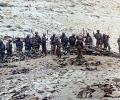
In the 15-year dataset, the researchers noted an average of 7.8 incursions per year even though the Indian government's estimates are much higher.

Phunchuk Stobdan's forte was candour and strong views on India's defence. Naturally, India's adversaries were in awe of him, fearing his views and unyielding stand on boundary issues, remembers Tarun Vijay.

China has welcomed the appointment of Vikram Doraiswami as the new Indian Ambassador, expressing optimism for improved Sino-India relations. Doraiswami, a seasoned diplomat with experience in China, is expected to play a key role in managing complex bilateral issues and fostering cooperation.

'Nepal today is far more aware, self-confident, aspirational, and assertive.' 'India's policy so far has not been geared to this shift. It is time to redraw our Nepal strategy.'

The report evaluates the likely military, strategic and international fallout for China under scenarios ranging from a "major war" to a "minor conflict" with Taiwan, Focus Taiwan said.

Israel and the United States had a plan. Iran punched back. And now the Gulf is reeling, the world is beginning to feel the pain and, as on date, no one in Washington or Tel Aviv appears willing to admit that the punch has landed, notes Prem Panicker, continuing his must-read blog on the war in the Middle East.

Prime Minister Narendra Modi and Chinese President Xi Jinping are expected to hold bilateral meetings on the sidelines of the SCO summit in Tianjin, as both nations look to strengthen ties amid global trade tensions.
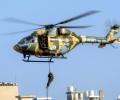
'The tools of warfare are changing. The MoD must deepen its engagement with technology thinkers that can present compelling visions of where warfare may be heading.'

The enduring relationship between the two countries have survived the disintegration of the erstwhile USSR in 1991, the end of the Cold War and the regime change in both countries, points out Rup Narayan Das.
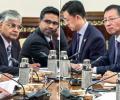
'These efforts by Beijing can be weaponised one day with economic, security and political implications for India.'
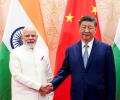
'What's currently underway is not a 'reset'.' 'What needs to be arrived at is a new balance.'

A Chinese team of virologists has discovered a new bat coronavirus that can infect human cells, raising concerns about potential animal-to-human transmission. The virus, a new lineage of the HKU5 coronavirus, uses the same human receptor as the virus that causes COVID-19. The study, led by Shi Zhengli, a prominent virologist at the Wuhan Institute of Virology, was published in the journal Cell. The discovery comes amid ongoing scrutiny of the Wuhan lab, which was previously accused of being the source of the COVID-19 pandemic. The Chinese government has denied any involvement in the virus's origin and insists that the Wuhan lab never engaged in gain-of-function studies on coronaviruses.

China has firmly denied that its Wuhan Institute of Virology conducted gain-of-function studies on coronavirus, rejecting allegations that the US Agency for International Development (USAID) funded such research at the lab. The Chinese Foreign Ministry spokesperson, Guo Jiakun, emphasized that the lab has never engaged in gain-of-function research, designed, made, or leaked COVID-19. China has also reiterated its stance on the origins-tracing of COVID-19, stating that the pandemic was "extremely unlikely" to have originated from a lab leak, as concluded by the WHO-China joint mission.
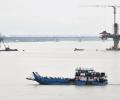
'China could intentionally release excess water.' 'The North East is already flood-prone during the monsoon, and even a controlled release from Chinese dams (during the monsoon) could worsen flooding.'

Amidst growing panic over Trump's ban on Harvard's international student enrolment, overseas education consultants have this advice for Indian students.
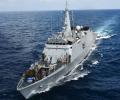
The maiden Africa India Key Maritime Engagement exercise will be held from April 13 to 18 off the coast of Dar es Salaam, Tanzania.

China's official media on Sunday criticised United States bomb attacks on Iranian nuclear sites as a further step toward the abyss, while experts in Beijing said the American bunker-buster bombs used in strikes may not be enough to destroy Iran's nuclear plants hidden deep underground.

After the 1962 War with China, there was a demand to forge greater defence cooperation between India and the West. One such voice was that of Sudhir Ghosh, a distinguished MP, to tie up strategic cooperation with the USA immediately after the Chinese attack on India, recalls Rup Narayan Das.
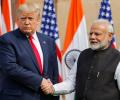
The China threat continues to resonate in the strategic partnership between India and the USA, points out Rup Narayan Das.
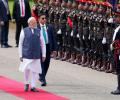
'Granting the country's highest civilian honour to Prime Minister Modi was surprising as it indicated the government was going out of its way to have India as a close partner.'

'Disengagement is merely the first step in a lengthy process of arriving at a new normal along the LAC in Eastern Ladakh and the entire land boundary.' 'The Indian government should insist on the restoration of the status quo ante in Eastern Ladakh.'
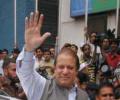
Pakistan may improve its ties with India and fine-tune its anti-terror strategy under the new government headed by Pakistan Muslim League-N leader Nawaz Sharif, Chinese analysts have said.
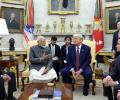
'By his words, actions, and body language during their joint press appearance wanted to convey his personal respect and, more broadly, his desire to work closely with India.'
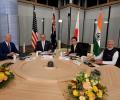
Saturday's Quad meeting in Delaware is taking place against the backdrop of China's assertive behaviour in the South China Sea, its sabre-rattling in the Taiwan Strait and increasing footprints in the Pacific and Indian Ocean, asserts Rup Narayan Das.

Chinese Ambassador Sun Weidong has said peace and tranquility in the border areas with India is important but it is not the "whole story" of the bilateral relations and that the current status of the ties is obviously not in the fundamental interest of either side, remarks that came amid the Ladakh military standoff.

India's economy is slowing down due to domestic issues, says Sumit Ganguly.

Strategic consideration were the reasons behind frequent meetings between United States President Barack Obama and Prime Minister Narendra Modi, Chinese state-run media said on Wednesday and cautioned India that it cannot rise by "containing" China or picking one side against the other.
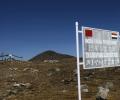
India has been rejecting China renaming places in Arunachal Pradesh, asserting that the state is an integral part of the country and assigning "invented" names does not alter this reality.
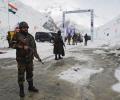
With Beijing remaining intransigent on the withdrawal of additional troops deployed by the People's Liberation Army (PLA) since the deadly border clash in 2020 in eastern Ladakh, India's bilateral ties with China remained frozen in 2023 with no forward movement on the horizon despite several rounds of diplomatic and military talks.

'The two sides agree to continue firmly supporting each other in safeguarding their respective core interests,' a joint statement issued at the end of Muizzu's talks with Chinese leaders said.

'We have not had one discussion on the border incursions or the subsequent report of the building of Chinese villages on Indian territory in Arunachal Pradesh.'
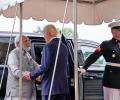
Foreign policy is always a work in progress and ups and downs are built into foreign policy process. What is permanent is national interest. Hopefully, this year, which will also witness general elections in the country, will also clear clouds in the foreign policy horizon, observes Rup Narayan Das.
